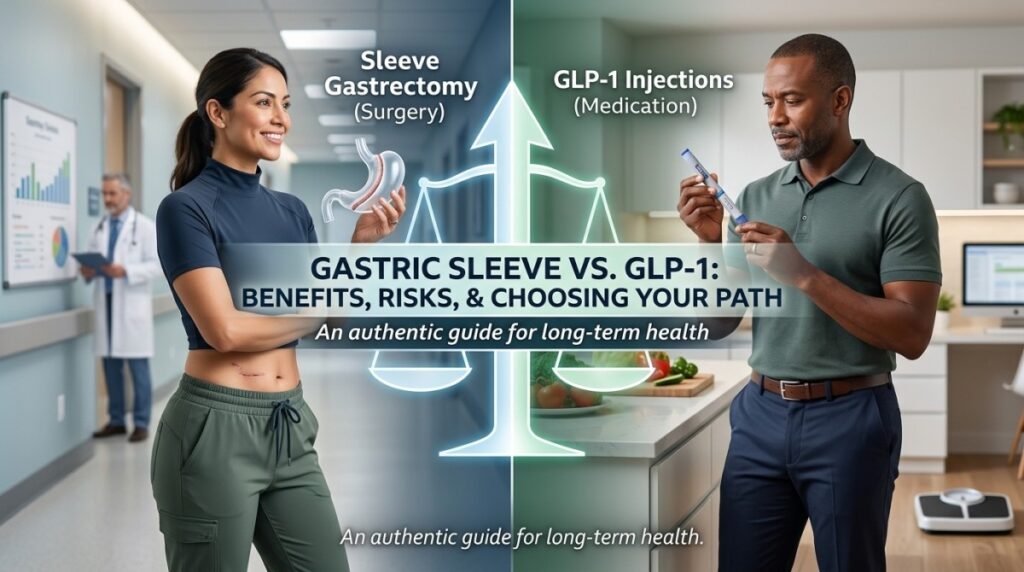
If you’ve been struggling with weight loss for years, you know the cycle: restrict, lose a little, hit a wall, gain it back. For a long time, bariatric surgery like the gastric sleeve was the absolute gold standard for breaking that loop.
Then came GLP-1 medications. Drugs like semaglutide (Wegovy, Ozempic) and tirzepatide (Zepbound, Mounjaro) have completely reshaped the landscape.
Now, everyone wants to know: Should you get surgery or take the weekly injection?
There isn’t a one-size-fits-all answer. Both options treat obesity as a chronic medical condition rather than a moral failure, but they do so through very different pathways. Here is a clear, honest breakdown of the differences, benefits, side effects, and long-term realities of both.
How They Work: Mechanics vs. Biochemistry
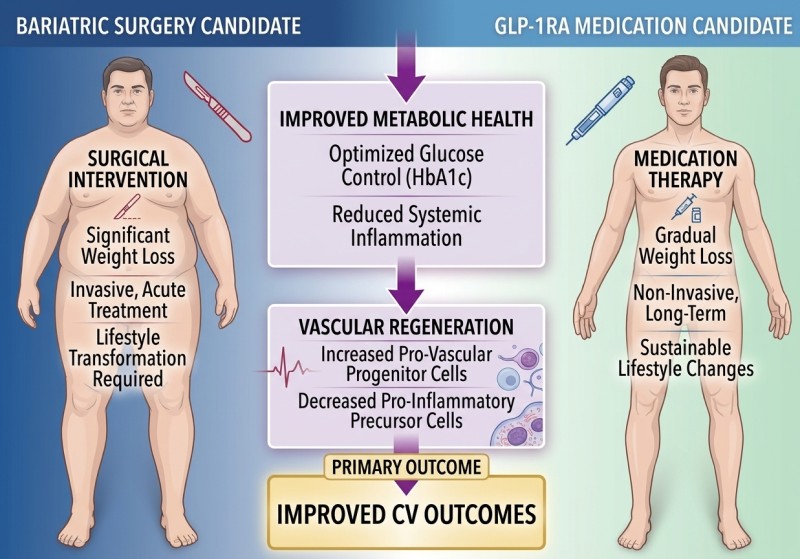
The primary difference comes down to structural physical change vs. chemical metabolic modulation.
Gastric Sleeve (Sleeve Gastrectomy)
What it is: A minimally invasive laparoscopic surgery where a surgeon permanently removes about 75% to 80% of your stomach, leaving behind a narrow tube or “sleeve” roughly the size of a banana.
How it works: It operates on two fronts:
- Physical Restriction: Your smaller stomach holds significantly less food, making you feel full after small portions.
- Hormonal Reset: The portion of the stomach removed (the fundus) is where the hunger hormone ghrelin is primarily produced. Removing it dramatically decreases your baseline appetite for months to years post-surgery.
GLP-1 Agonists (Injections)
What it is: A class of synthetic peptide medications delivered via a weekly subcutaneous injection.
How it works: These drugs mimic GLP-1 (glucagon-like peptide-1), a natural hormone your gut secretes after eating.
- Slowed Gastric Emptying: It keeps food in your stomach longer, making you feel physically full faster and for an extended period.
- Brain-Level Satiety: It targets the appetite centers in your brain, quieting what patients often call “food noise”—the constant background chatter about what, when, and how much you’re going to eat.
The Comparison: Side-by-Side
The Benefits: Where Each Option Shines
Why Choose Gastric Sleeve?
Superior Weight Loss: Sleeve gastrectomy generally produces greater, faster weight loss. If you have a BMI over 40 (or 35 with health comorbidities), surgery often moves the needle further.
Higher Type 2 Diabetes Remission: The rapid metabolic shift after surgery triggers immediate improvements in insulin sensitivity, often putting Type 2 Diabetes into remission within weeks.
One-and-Done Intervention: While you must commit to a lifelong healthy diet and supplement regimen, you aren’t reliant on a monthly prescription or continuous insurance coverage for a drug to maintain results.
Why Choose GLP-1 Medications?
No Surgery or Downtime: You avoid the risks inherent to general anesthesia, surgical complications, and recovery times.
Total Flexibility: You can start, adjust doses under medical supervision, or stop. You aren’t permanently modifying your internal anatomy.
Quiets “Food Noise” at the Brain Level: Many patients report that GLP-1s do something surgery alone doesn’t always achieve: they shut down emotional cravings and compulsive thoughts around food right out of the gate.
The Catch: Real-World Considerations & Risks
No treatment is a magic wand. Both paths come with serious trade-offs that demand careful thought.
1. The Discontinuation Paradox (GLP-1s)
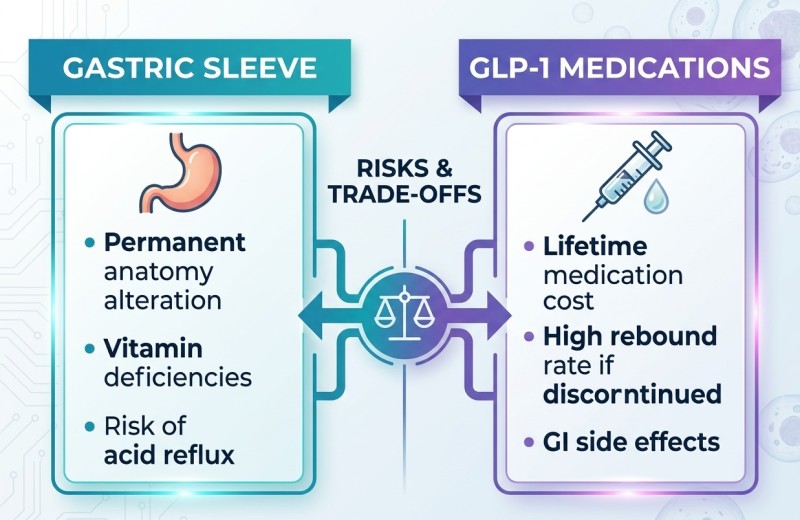
The single biggest drawback of GLP-1 medications is maintenance. Clinical studies show that when patients stop taking GLP-1 drugs, the metabolic brakes come off, hunger returns, and the majority of lost weight is regained over time. You must be prepared to stay on these medications long-term.
2. Surgical Risks & Nutrient Deficiencies (Sleeve)
The gastric sleeve carries typical surgical risks (bleeding, leaks, infection), along with a higher long-term chance of developing gastroesophageal reflux disease (GERD). Studies also show that because you absorb fewer nutrients due to smaller intake volumes, you may experience deficiencies.
3. Financial & Insurance Hurdles
GLP-1s: Out-of-pocket costs without insurance can range from $900 to $1,300+ per month. Insurance coverage remains inconsistent depending on your provider and employer plan.
Gastric Sleeve: While initial cost is high ($15,000–$25,000 out-of-pocket), many major insurers cover bariatric surgery if specific BMI criteria and pre-op requirements are met. Over a 5-year period, surgery can prove significantly more cost-effective than continuous medication. There are many low-cost options including undergoing gastric sleeve in Tijuana, Mexico.
How to Decide: Which Path Fits You?
Ask yourself these questions when consulting with your doctor or a bariatric specialist:
Consider GLP-1 Medications if:
- Your BMI is between 27 and 32, or you aren’t a candidate for general surgery.
- You want a non-invasive option to lose 15–20% of your body weight.
- You have reliable long-term insurance coverage or financial flexibility for monthly prescriptions.
Consider Gastric Sleeve if:
- Your BMI is 35+ (or 30+ with sleep apnea, high blood pressure, or diabetes).
- You need significant, permanent weight loss to resolve severe health conditions.
- You want a permanent metabolic intervention without relying on continuous prescription refills.
The Bottom Line
This isn’t an “either/or” rivalry anymore. In modern obesity medicine, doctors frequently use GLP-1s before surgery to help high-risk patients drop weight safely before an operation, or after surgery if a patient experiences weight regain years down the road.
Both methods are powerful tools—not easy ways out. Success with either still relies on the same foundation: high-protein nutrition, strength training to preserve muscle mass, and sustainable lifestyle changes.